Over the last months, I have written a lot about architecture before implementation.
About the need for a shared language and a real blueprint. About reducing business processes to a small set of fundamental building blocks. About boundaries following decisions rather than data. About autonomy living in decision rights, not in service ownership. About trust, auditability, and compliance emerging from structure rather than being bolted on later.
All of these ideas point to the same question: What happens after the model?
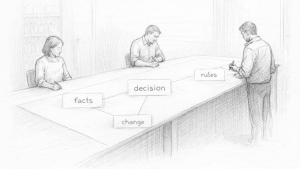
What happens after the workshop, after the EventModel, after the business decisions have been clarified, after the slices are visible, after responsibilities are understood?
At some point, the system still has to run.
It has to be built, packaged, tested, deployed, secured, observed, scaled, upgraded, rolled back, and operated reliably in production.
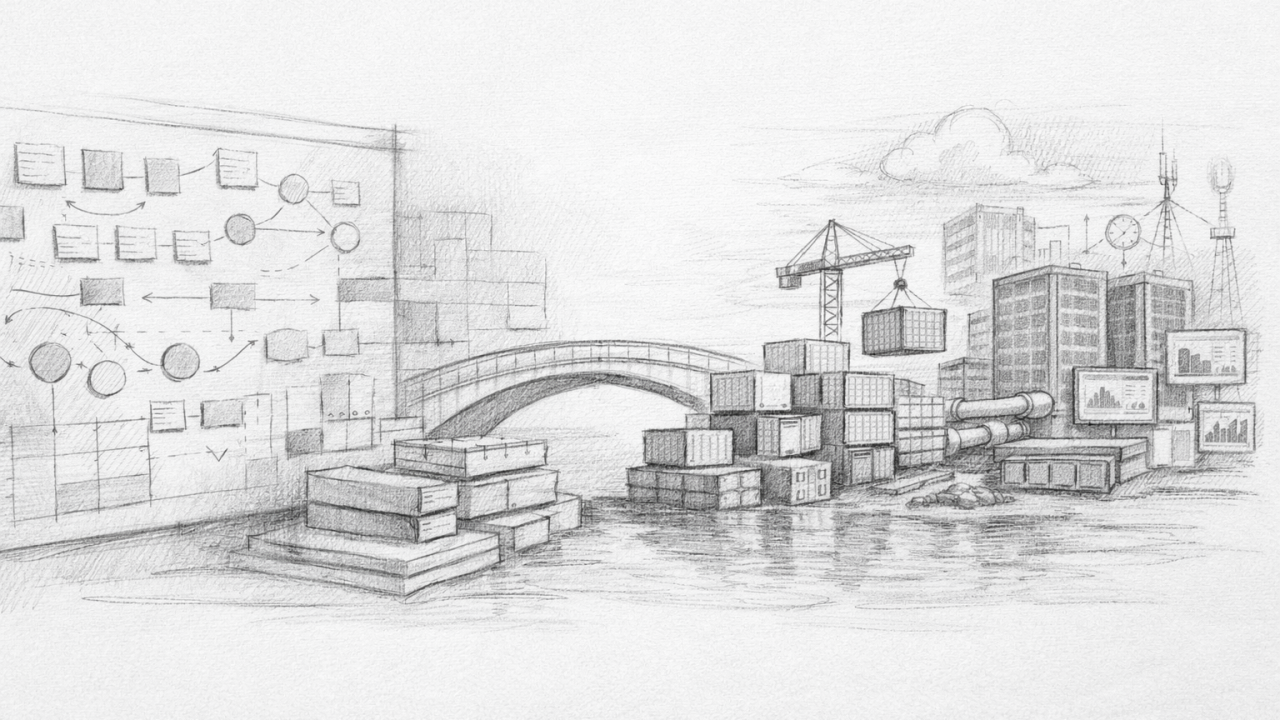
That is exactly the bridge I wanted to build in The Ultimate Docker Container Book.
Yes, it is a book about Docker, containers, Kubernetes, networking, observability, security, cloud deployment, and modern DevOps practices. But for me, it is also about something broader: the journey from architecture to runtime.
Because architecture does not end when the whiteboard session is over.
It only becomes real when the design survives contact with production.
A good model gives us clarity. Good boundaries reduce coordination. Explicit facts make decisions explainable. Vertical slices turn ambiguity into implementable work. But containers and orchestration are what allow those decisions to become portable, reproducible, scalable, and operable in the real world.
This is also why I find the connection between my recent posts and the book so natural.
When I write that delivery should feel almost boring once the thinking is done properly, I mean that execution should stop being a second discovery phase.
When I write that trust is an architectural outcome, I mean that systems should preserve context and make decisions explainable instead of forcing organisations to compensate with process and heroics.
When I write that boundaries follow decisions, not data, I mean that autonomy becomes real only when responsibility and published facts are clear.
And when I write about guardrails instead of gatekeepers, I mean that non-functional concerns such as platform standards, security, and operational reliability should be made explicit and designed in, not discovered too late.
This is where The Ultimate Docker Container Book comes in.
The book does not stop at “how to run a container.” It goes further into the realities of distributed systems and modern production environments: API gateways, Saga, CQRS, Event Sourcing, Strangler patterns, tracing, monitoring, rolling updates, blue-green deployments, canary releases, rollback, and roll-forward strategies. In other words, it looks at how modern systems are actually built and operated once architecture meets runtime.
For me, that is the real value.
Not just learning commands. Not just learning tooling. But understanding how sound design and sound runtime practices reinforce each other.
Because containers do not replace architecture.
They amplify it.
If the boundaries are good, containers and orchestration help teams move faster with more confidence. If the boundaries are poor, we simply end up with a distributed mess running very efficiently.
That is one of the core ideas behind The Ultimate Docker Container Book.
So if my recent posts on EventModeling, business building blocks, decision-centric boundaries, vertical slices, trust, compliance, and architectural clarity resonated with you, then this book may be interesting to you too.
It is written for people who do not just want to learn Docker commands, but want to understand how modern systems move from idea to model to implementation to production.
From architecture to runtime.
And if that is a journey you care about, I think you will find a lot of value in this book.
Originally published on LinkedIn (2026-03-22): https://www.linkedin.com/pulse/from-architecture-runtime-gabriel-n-schenker-ekpme